
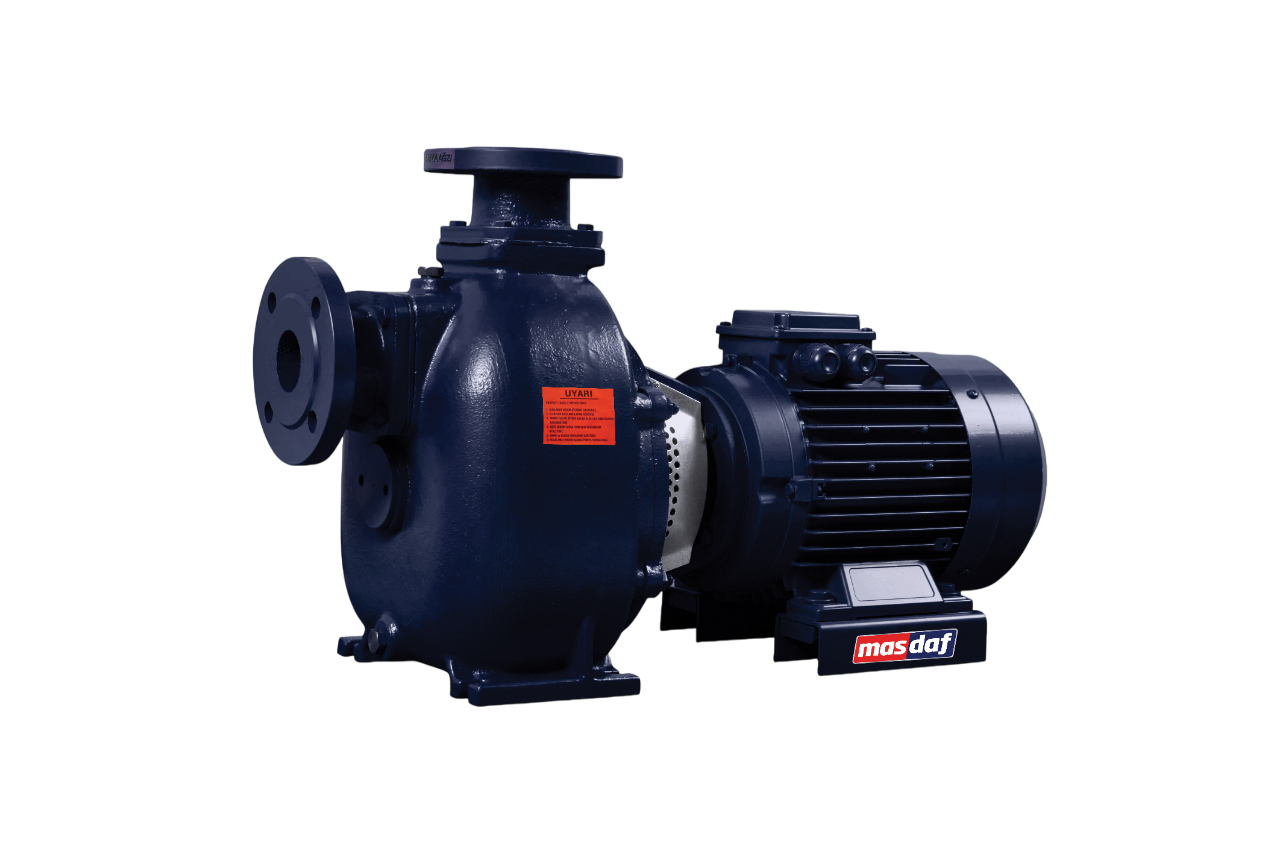
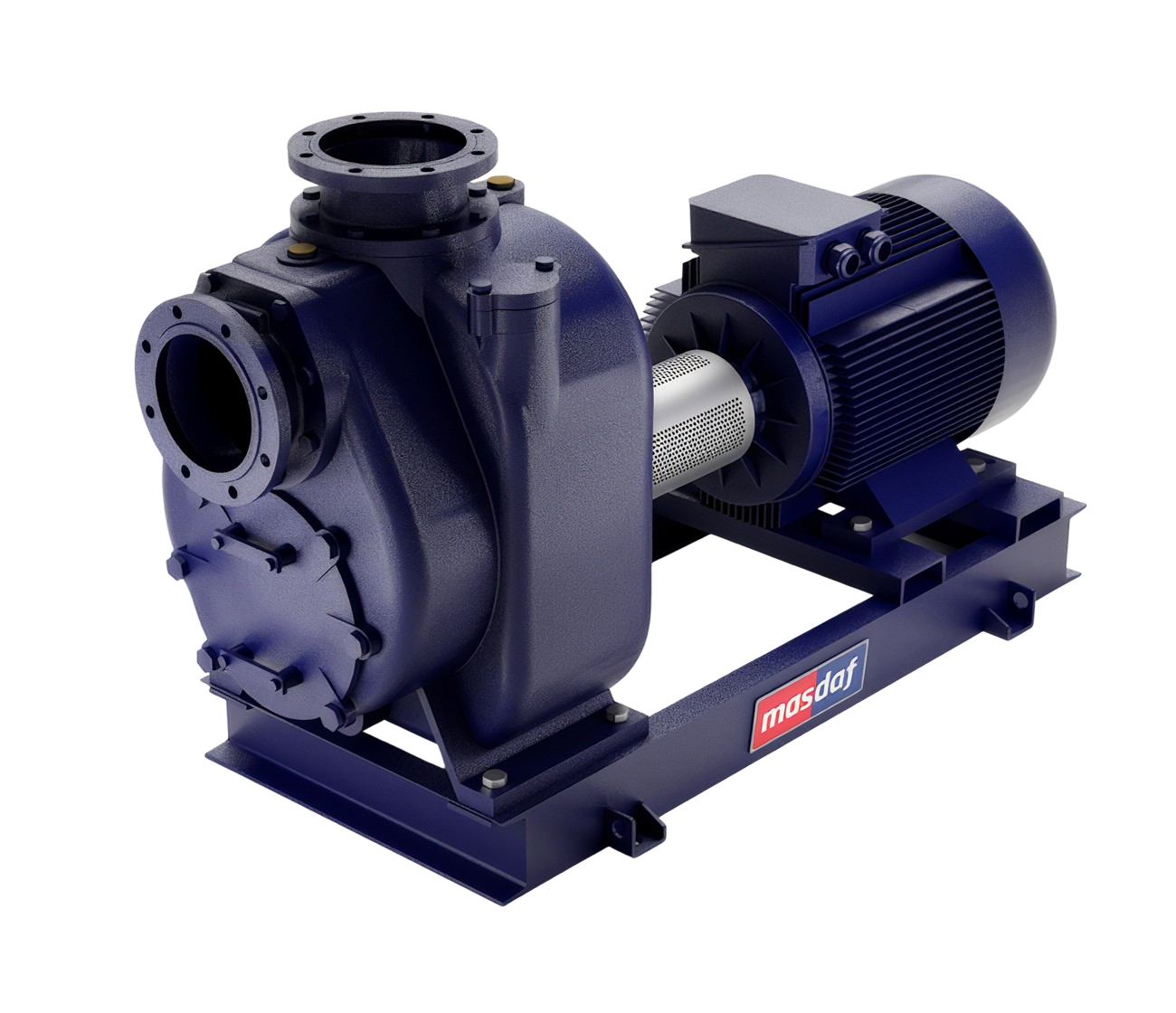
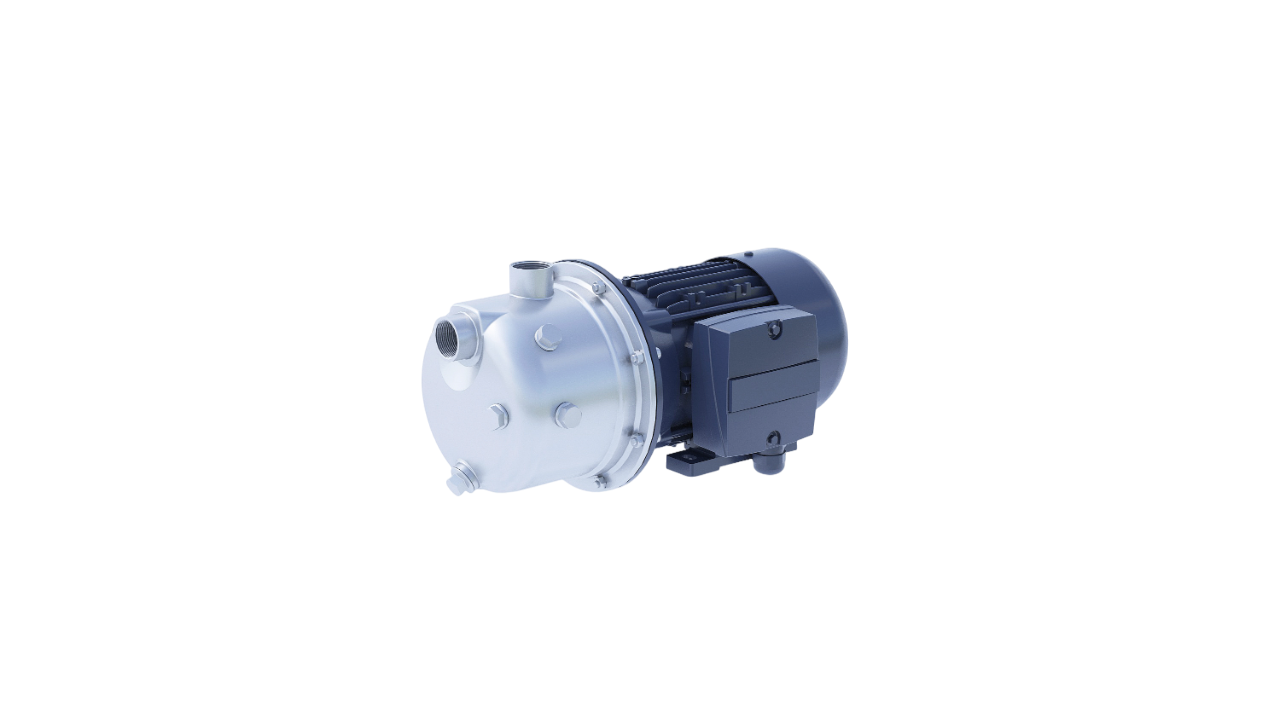
A self-priming pump is designed to provide reliable fluid transfer across various industries. By activating quickly during the initial startup of the system, it helps operational processes proceed in a more controlled manner. Masdaf’s Jet, UKMS, and MiniUKM models deliver high efficiency in residential, industrial, infrastructure, and drainage applications.
Each model is engineered with technical details optimized for the physical conditions of its operating environment. This ensures stable performance in both clean water and demanding fluids containing solid particles. With various suction heights, flow rates, and discharge pressure ranges, these pumps offer a wide operating spectrum.
The Jet model provides a suction height of up to 8 meters. With single-phase and three-phase motor options, it primarily meets the needs of detached houses and low-rise residential systems. The UKMS model, on the other hand, is a self-priming pump designed for much harsher conditions. Its ability to pass particles up to 76 mm ensures safe fluid discharge in industrial and domestic sewage applications. The MiniUKM model, with its compact structure, is used in lighter industrial processes and surface water transfer in confined spaces.
Self-Priming Pump Models Suitable for Use at Different Capacities
Self-priming pumps are manufactured with a wide range of capacity options to suit diverse application needs. The self-priming Jet pump model is specifically developed for residential and garden irrigation applications requiring low to medium flow rates. With a flow range of 0.5–3 m³/h and a head of 15–45 m, it provides an ideal balance for standard water supply systems. A speed of 3000 rpm supports stable performance, while multiple motor options address various user requirements.
The UKMS model is designed for much larger fluid transfer volumes and features a high-capacity structure. Its flow range of 50–730 m³/h provides the power required to discharge intensive wastewater flows in infrastructure and industrial facilities. Flange diameter options from 2” to 10” allow compatibility with large piping systems.
The MiniUKM model is a compact alternative preferred for medium-scale drainage applications. With a flow range of 5–45 m³/h, it offers capacity suitable for both domestic and light commercial water discharge needs. DN 50 flange dimensions allow easy connection in both fixed and portable systems.
Self-Priming Pump Performance in Challenging Work Environments
Jet, UKMS, and MiniUKM models are developed based on design principles that adapt to different field conditions. Key features of self-priming water pump models include:
- Jet: Designed for long-lasting performance in residential water systems. Its quiet operation reduces vibration in mechanical components, improving comfort and extending component lifespan. Double-protection sealing minimizes the risk of water contact with the motor, preventing failures.
- UKMS: A heavy-duty model engineered for wastewater containing solid particles, mud, and aggressive contents. Its ability to pass particles up to 76 mm ensures smooth flow in sewage and treatment facilities. The robust casing and maintenance capability without dismantling the piping save significant time in industrial environments.
- MiniUKM: Despite its compact structure, it delivers stable performance in demanding surface water drainage applications. Its special impeller design quickly removes low-level water accumulations, helping reduce the risk of sudden flooding. It can be safely used in maritime applications and humid, corrosion-prone environments.
These models adapt to variable site conditions to provide uninterrupted flow management. Durable material selection offers long-term protection against wear and corrosion, while portable casing structures and practical connection points simplify field installation.
Self-Priming Pump Systems Offering Wide Flow and Pressure Ranges
Self-priming pump systems can operate across a wide range of flow rates and pressure levels. They ensure accurate performance in both small-volume water transfer applications and large industrial discharges. Jet, UKMS, and MiniUKM models represent this diversity through distinct technical infrastructures.
The Jet model, with a flow range of 0.5–3 m³/h, is ideal for residential and garden applications. Its discharge head of 15–45 m delivers balanced performance for well water extraction and domestic use.
The UKMS model supports a much broader operating range. With a flow capacity of 50–730 m³/h, it provides ideal solutions for facilities handling large volumes of wastewater. A discharge range of 4–40 m supports both horizontal and mildly vertical discharge applications.
The MiniUKM model, with a flow range of 5–45 m³/h, is an ideal alternative for medium-scale surface water operations. Selecting the correct capacity and pump model is essential for long-lasting and efficient operation. By reviewing Masdaf’s Jet, UKMS, and MiniUKM solutions, you can easily choose the most suitable self-priming centrifugal pump for your needs.
Frequently Asked Questions About Self-Priming Pumps
What Is a Self-Priming Pump?
A self-priming pump evacuates air from the suction line during initial startup, allowing water to fill the pump automatically. This structure enables the pump to operate smoothly even when positioned above the water level. It offers fast commissioning and ease of use in applications such as wells, surface water, drainage, and wastewater.
What Is a Jet Pump?
A jet pump is a surface pump that provides high suction depth through its ejector (jet) system. Using the venturi principle, it increases water velocity to create a pressure differential, enabling water to be drawn from the suction line. It delivers high suction performance in well applications, garden irrigation, and residential water supply.
How Does a Self-Priming Pump Work?
A self-priming pump first fills the chamber in its casing with water to create a mixture. As the impeller rotates, air and water are separated; air is expelled while a vacuum forms in the system. This vacuum draws water through the suction line, ensuring continuous flow. After initial startup, the pump operates stably without requiring re-priming.
How Does a Jet Pump Work?
A jet pump uses its venturi–ejector structure to increase water velocity and create a low-pressure zone. This low pressure pulls water upward from the suction line. Thanks to the jet system, it can draw water from deeper levels than standard surface pumps, typically delivering high performance at suction depths of 8–20 meters.
What Are the Application Areas of Self-Priming Pumps?
Self-priming pumps are used in residential water supply, garden irrigation, well water extraction, surface water drainage, treatment plants, industrial fluid transfer, and light wastewater discharge. They also provide practical solutions for flood control, agricultural irrigation, and emergency response operations.
What Are the Application Areas of Jet Pumps?
Jet pumps are primarily used in applications requiring deep suction, such as deep well water supply, garden and field irrigation, summer house and villa water systems, booster pump feeding, and high-suction surface water applications.
Is It Safe to Use Self-Priming Pumps in Industrial Facilities?
When the correct model is selected, using self-priming pumps in industrial facilities is highly safe. Models designed for solid particle passage deliver stable performance in heavy wastewater and chemically aggressive fluids. Features such as sealing integrity, motor protection, and ease of maintenance enhance operator safety. With proper flow and pressure selection, uninterrupted and safe operation is ensured.